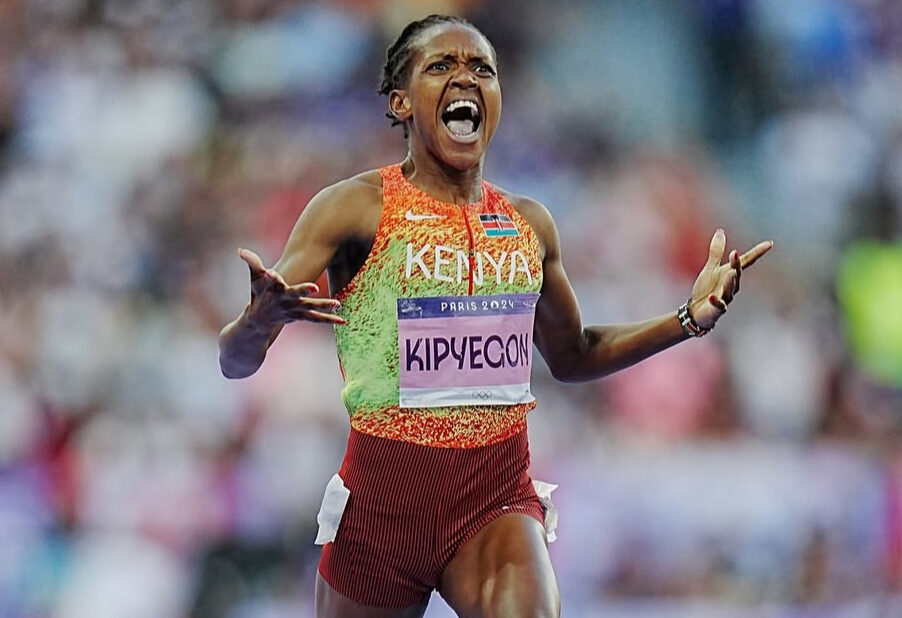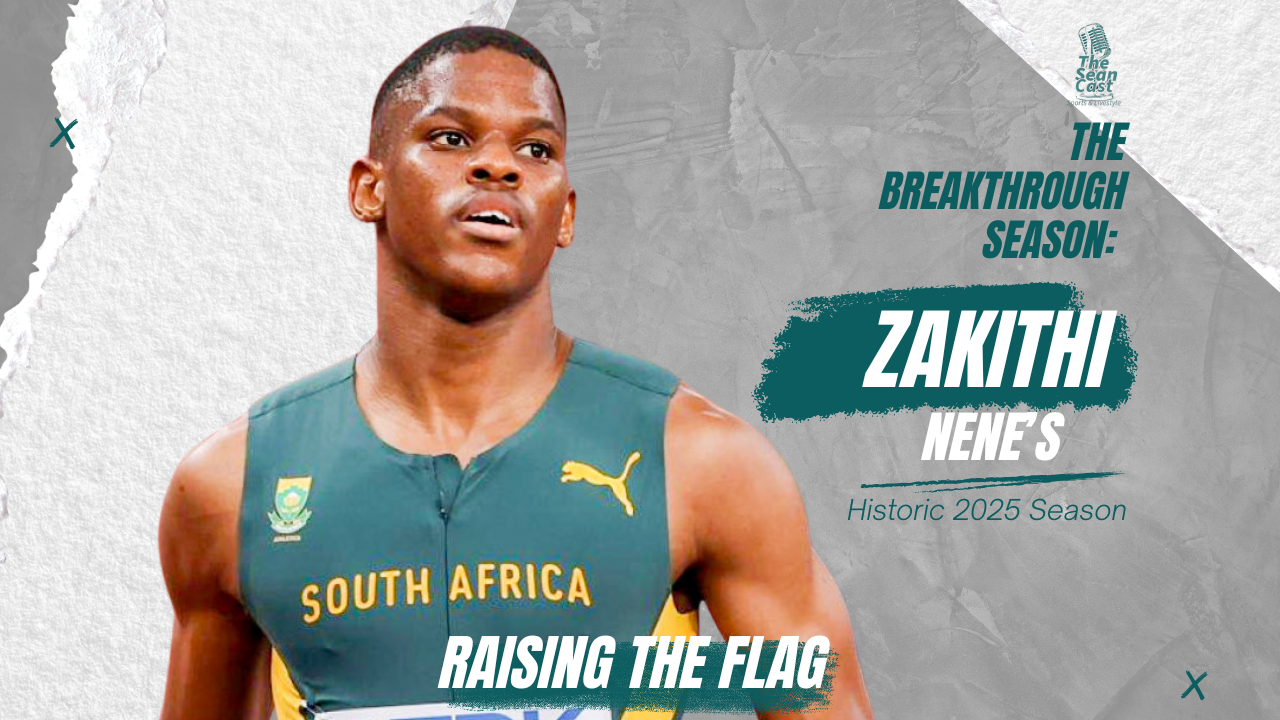

The Week African Athletics Ran, Jumped, and Threw Past the World
Oslo lit the fuse, Eugene set it off, and Los Angeles delivered the final word. Across three of track and field’s premier stages this past week, 15 African athletes delivered the most explosive sprints, jumps, throws, and middle-distance runs on the planet.
In the span of just seven days, Olympic 800m champion ran a lifetime best and narrowly lost, a 20-year-old shattered a collegiate 400m record untouched since 2018, and a Nigerian sprinter conquered a 200m headwind so fierce it fundamentally altered the race dynamics. African athletics didn’t just participate this week—they dictated the terms of global competition.
What follows is a quality-based ranking against the world, measuring where each mark sits on the 2026 global and all-time lists. A professional’s Diamond League victory and a college junior’s breakthrough are measured on the exact same ruler. Wind-aided marks are discounted; headwind performances are credited. All performances have been cross-referenced with World Athletics and official NCAA results.
The Top 15 at a Glance
| # | Athlete | Event · Meet | Mark |
|---|---|---|---|
| 1 | Emmanuel WanyonyiKEN | Men’s 800m · Oslo (DL)June 10 · Oslo | 1:42.09World #2 2026 |
| 2 | Samuel OgaziNGR | Men’s 400m · NCAAJune 12 · Eugene | 43.38NCAA Rec · #4 all-time |
| 3 | Sanu Jallow-LockhartGAM | Women’s 800m · NCAAJune 13 · Eugene | 1:56.85NCAA Rec · #3 world |
| 4 | Letsile TebogoBOT | Men’s 200m · Oslo (DL)June 10 · Oslo | 19.84DL win · eased down |
| 5 | Favour OfiliNGR | Women’s 200m · LA GPJune 14 · Los Angeles | 22.45Win · into −3.1 m/s |
| 6 | Chinecherem NnamdiNGR | Men’s Javelin · NCAAJune 10 · Eugene | 82.26mNCAA champion |
| 7 | Yasser TrikiALG | Men’s Triple Jump · Oslo (DL)June 10 · Oslo | 17.323rd · 17m+ jump |
| 8 | Temitope AdeshinaNGR | Women’s High Jump · NCAAJune 13 · Eugene | 1.96mNCAA champion |
| 9 | Tafadzwa ChikombaZIM | Men’s Long Jump · NCAAJune 10 · Eugene | 8.37mChampion · PB (−0.7) |
| 10 | Saly SarrSEN | Women’s Triple Jump · Oslo (DL)June 10 · Oslo | 14.752nd · wind-legal |
| 11 | Rose YeboahGHA | Women’s High Jump · NCAAJune 13 · Eugene | 1.96m2nd · countback |
| 12 | Kanyinsola AjayiNGR | Men’s 100m · NCAAJune 12 · Eugene | 9.72wChampion · +2.2 m/s |
| 13 | Kevin KipronoKEN | Men’s Triple Jump · NCAAJune 12 · Eugene | 16.84m2nd · +1.6 m/s |
| 14 | Israel OkonNGR | Men’s 200m · NCAAJune 12 · Eugene | 19.992nd · sub-20 at 19 |
| 15 | Sinesipho DambileRSA | Men’s 200m · Oslo (DL)June 10 · Oslo | 20.122nd · behind Tebogo |
The Breakdown — One Performance at a Time
The best African performance of the week came from a man who got beaten. Wanyonyi, the Olympic and world 800m champion, lost by a single hundredth — 1:42.08 to 1:42.09 — as 17-year-old American Cooper Lutkenhaus threw himself at the line. Look past the result. A 1:42.09 is one of the fastest times anyone, anywhere, has run in 2026, and Wanyonyi produced it fresh off missing Stockholm for the birth of his first child, after being passed with 200 metres to run.
Sub-1:42 is rarefied air — only a handful of men in history have ever been there, and Wanyonyi lives on its doorstep. His weapon is the finish: passed with a lap’s half to go, a position that buries virtually every 800m runner alive, he clawed all the way back to within a hundredth. That is elite anaerobic capacity plus the rare gift of re-accelerating near top speed when the tank should be empty. The race ran just outside David Rudisha’s 2010 meeting record of 1:42.04.
On a quality-versus-world basis, the raw speed outweighs the placing. Heading into the championship season, the gold standard at two laps still wears Kenyan colours.
Source: worldathletics.org — Oslo Bislett Games race report (10 JUN 2026).
This was the fastest one-lap run on Earth this week and the greatest 400m in NCAA history. Ogazi, out of Kaduna by way of Alabama, demolished Michael Norman’s 2018 collegiate record of 43.61 and rocketed to fourth on the world all-time list — behind only Wayde van Niekerk, Michael Johnson and Butch Reynolds. NCAA Record
He went through 200m in roughly 20.5 — aggressive, but under control — then did the hard part: almost no deceleration over the final 80 metres, the signature of freakish lactate tolerance. The season read like a staircase: 44.02, 43.95, 43.82, then 43.38. High, compact arm carriage through the bend kept him square and cut energy leaks. He’s the first African-born man under 43.40, and barely 20 years old. The all-time record is no longer a fantasy sentence.
Minutes after Ajayi’s 100m title, Ogazi closed the Nigerian night with a record of his own — and pointed the whole programme at the 2027 World Championships.
Source: NCAA.com official results (12 JUN 2026); all-time list via worldathletics.org.
A professional-grade time in a college singlet. The Gambian Olympian erased Athing Mu’s collegiate record of 1:57.73 — long considered untouchable — by the better part of a second, and the mark ranks third in the world for 2026, ahead of most of the paid field. NCAA Record
The number that tells the story is her opening lap: 55.03. Holding that out to a 1:56.85 finish points to one of the highest aerobic-power engines in women’s two-lap running right now. Where Mu’s record leaned on pure 400m wheels, Jallow-Lockhart’s is a long, even burn built on extraordinary lactate clearance. She led from the bell, opened five metres in the back half, and was never threatened — and Hayley Kitching’s 1:57.65 in second, also under the old record, shows how honest the pace was.
From a 2:05 freshman to a record-breaker disqualified in last year’s semi, she rewrote one of the sport’s great marks in a single season. The Gambia has a global 800m contender.
Source: NCAA.com official results (13 JUN 2026).
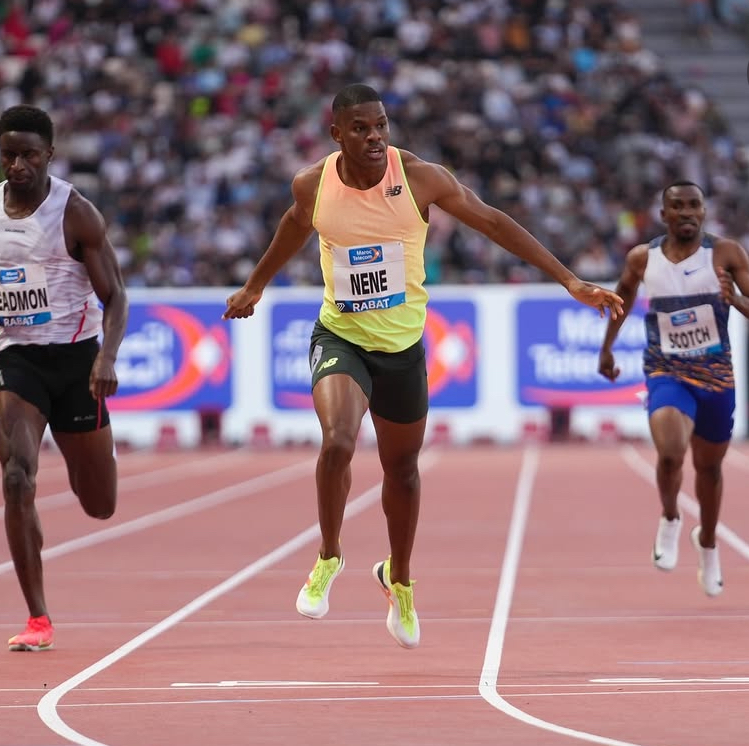
The Olympic 200m champion opened his Diamond League season account in Oslo, clocking 19.84 (+0.2 m/s) while visibly shutting down before the line. A sub-19.85 in near-neutral wind, produced without a full-effort finish, is one of the highest-quality sprint marks of the week — and a quiet warning to the field. He beat South Africa’s Sinesipho Dambile and held off the hyped Australian teenager Gout Gout.
Tebogo’s gift is a relaxed, fast curve flowing into a long, efficient straight. Running 19.84 while decelerating suggests a full-send mark comfortably inside 19.7 — a place very few have visited. His upright posture and low ground-contact times let him hold top-end speed deep into the race, which is where the 200m is won. With +0.2 m/s behind him, this translates straight to championship conditions.
Reigning Olympic champion, in June form like this, is the man everyone else has to plan around.
Source: worldathletics.org — Oslo Bislett Games results (10 JUN 2026).
The week’s most deceptive line on the results sheet. Ofili won the LA Grand Prix 200m in 22.45 — a time that reads as merely good until you see the wind: −3.1 m/s straight in the face, the kind of gale that adds several tenths to a half-lap. Adjust for it and this is comfortably a sub-22 run in still air, which would make it one of the best African sprint marks of the entire week. She ran the bend hard, pulled clear down the straight, and brought compatriot Rosemary Chukwuma home third.
Headwind is the great liar of 200m running. A −3.1 m/s reading punishes an athlete for the whole home straight, and the clock balloons no matter how good the form. Ofili, the Nigerian record holder at 21.96 and an Olympic finalist, has the upright top-end mechanics and stride length to keep driving when the air pushes back — exactly what this race demanded. Winning by more than four tenths in those conditions is the real headline; the time is the conditions’ fault, not hers.
Two Nigerians on the podium, into a gale, on the last day of the window — a fitting full stop.
Source: USATF official LA Grand Prix results (14 JUN 2026); meeting status via worldathletics.org.
Nnamdi won the NCAA javelin title at 82.26m (269 ft 10 in) — a world-class distance that placed him among the best collegiate throwers on the planet in 2026. He arrived in Eugene with six throws beyond 80 metres on the season, a tally no other collegian came close to, and turned that consistency into a national title when it counted.
An 82-metre throw is a chain reaction: approach speed, a hard block, and a whip-fast delivery that channels energy from the ground through a braced front side into the implement. Six 80m-plus throws in a season says his model is repeatable, not a fluke — the surest sign of a thrower who holds up under championship nerves. For a Nigerian javelin athlete, this is a genuine senior-international calling card.
It also widened the Nigerian story beyond the sprint straight, out into the throwing circle.
Source: NCAA.com official results (10 JUN 2026).
Triki took third in a loaded Oslo triple jump, behind only Jamaica’s Jordan Scott and world indoor champion Andy Díaz — effectively the world indoor medal podium, reassembled outdoors. Seventeen metres is the bar for genuine global class, and Triki, a former world indoor bronze medallist and Olympic finalist, cleared it against the strongest field of the week. His placing mark was wind-aided; the 17.32 from his series is the honest measure of his level.
The triple jump is the cruelest of the horizontal events — three big landings, each one trying to steal the speed you started with. Triki’s edge is balance across the phases: he doesn’t blow everything on the hop, so he carries velocity into the final jump. At 1.93m he has the levers the event likes, and a sprinter’s runway speed to feed them. Against Díaz and Scott, the margins were tiny.
Source: worldathletics.org — Oslo Bislett Games results (10 JUN 2026).
Adeshina closed out an undefeated 2026 — indoors and outdoor — by clearing 1.96m for the NCAA outdoor title, her third NCAA crown. She and Ghana’s Rose Yeboah both topped the bar at 1.96m, but Adeshina took gold on a flawless card, clearing every height up to that point on her first try. The Nigerian record holder and Paris Olympian completed a rare double-season sweep.
High jump titles are usually decided by the countback — the ledger of misses on the way up — which rewards composure as much as spring. Adeshina’s first-time clearances all night are the story: every clean attempt banks energy and nerve for the bar that decides it, and that ledger is exactly what separated her from Yeboah. Her flop is built on a quick curved approach and a vertical, decisive takeoff. An undefeated season across both surfaces is a reliability signal that travels well to the senior stage.
Source: NCAA.com official results (13 JUN 2026).
Chikomba won the NCAA long jump with a personal-best 8.37m (27 ft 5½ in) — and crucially, into a −0.7 m/s headwind, which makes it a wind-legal mark of rare quality. It’s the furthest winning jump at the NCAA outdoor meet since Zack Bazile’s matching 8.37m in 2018, and it broke Chikomba’s own Kansas State record by nearly four inches.He becomes only the second Zimbabwean to win the NCAA title in 15 years. The last time an African won the NCAA long jump title was in 2011 by Makusha ( first Zimbabwean to win it)
Jumping 8.37m into a headwind is better than the number looks — a −0.7 m/s breeze typically shaves several centimetres, so his still-air equivalent sits past 8.40m. His sprint background (a 6.59 60m) feeds the approach velocity that decides nearly everything in this event, and his knack for turning that speed into lift at the board without braking is what put him clear of the field. A favourite who delivered a PB under pressure is a complete competitor.
Source: NCAA.com official results (10 JUN 2026).
Sarr, the world indoor triple jump bronze medallist, took second in Oslo with a wind-legal jump about 10 centimetres behind Cuba’s wind-assisted winner. A clean, legal effort in the fifth round against the world champion and world indoor champion is one of the best African field-event marks of the week and confirms her place among the global elite.
This event is about rhythm and the defence of horizontal speed across hop, step and jump. Sarr’s best came wind-legal while her rivals’ leading marks were wind-aided — which makes hers the more transferable to championship conditions, where only legal jumps count. Holding takeoff angles and bleeding the least velocity between phases is the central skill, and it put her within touching distance of a Diamond League win over the reigning world champion.
Source: worldathletics.org — Oslo Bislett Games results (10 JUN 2026).
Yeboah cleared a season-best 1.96m to finish national runner-up for the second straight outdoor year, losing gold to Adeshina only on countback. A 2024 Olympian and one of the most consistent jumpers in collegiate history, she needed third attempts at several earlier bars but found a way over each, surviving repeated elimination scares before matching the winning height.
Where Adeshina won on clean efficiency, Yeboah won on nerve — repeatedly using her last attempt to stay alive, a pattern that demands real composure and the ability to reproduce a sound jump on demand. That she reached 1.96m at all given the misses speaks to a high ceiling. The countback loss is a margin of a single failed attempt, not a gap in ability. As an Olympian, she remains a global-level competitor.
Source: NCAA.com official results (13 JUN 2026).
Ajayi ran 9.72 to win the NCAA 100m, with a +2.2 m/s wind just over the legal line — which is exactly why an otherwise stunning time sits here rather than near the top: on a world-quality scale, wind-aided marks get discounted. His wind-legal best of 9.84, set at the West Regionals in May, is the Nigerian national record and sits at African-record level. He’s the second Nigerian to win the NCAA 100m, after Divine Oduduru in 2018.
Ajayi’s strength is the drive phase and the transition to top speed. At 5’10” with long levers, his pure acceleration isn’t the most explosive, but his 60–70m phase is exceptional — in the final he was gone from 60 metres on. The +2.2 m/s tailwind inflates the clock by several hundredths, so 9.84 is the truer line. Holding upright mechanics without the late forward-lean collapse is a marker of world-class speed endurance.
Source: NCAA.com official results (12 JUN 2026).
Kiprono took NCAA triple jump silver with a wind-legal 16.84m — notable both for the athlete and for Kenya, a nation far better known for the 5,000m than the runway. His runner-up finish in one of the deepest collegiate fields of the meet marks him as one of the more unexpected and promising African field-event talents of 2026.
A 16.84m jump under legal wind is a solid development-level mark and the base of a real career. The priority from here is board consistency and phase distribution — squeezing more out of the step, where developing jumpers usually lose ground. The wider point matters too: African talent is broadening past the distance events, with athletes from running nations now winning medals in the explosive disciplines.
Source: NCAA.com official results (12 JUN 2026).
Okon cracked the sub-20 club with 19.99 in the NCAA 200m final, second to Jaiden Reid’s collegiate-record 19.63. It’s the fastest 200m by a Nigerian collegian this season, and at 19, Okon profiles as one of the most dangerous sprint prospects in the world. Wind-legal and run in a championship final, it carries solid world-quality weight.
Okon’s profile is built on unusually mature curve running — smooth lean, clean management of the forces through the bend — and a straight that hints at a top speed north of 11.5 m/s. His start still trails his top end, so as his block work sharpens, the times should keep falling. A 19.99 at 19 is a very high ceiling. He shares the Auburn group with Ajayi — a setup that produced two NCAA sprint champions in one weekend.
Source: NCAA.com official results (12 JUN 2026).
Dambile backed up a Stockholm runner-up finish with another second place in Oslo, clocking 20.12 behind Tebogo. A sub-20.2 against the Olympic champion, in a Diamond League field, twice in one week, marks him as a consistent presence near the top of the global 200m order and South Africa’s leading half-lapper in 2026.
His real value is repeatability — backing up a Stockholm-to-Oslo double in three days takes the neuromuscular durability that separates circuit regulars from one-hit performers. The 20.12 shows a strong, sustained top end; the 0.28 to Tebogo is a top-speed gap, not a flaw in his model. Among the more dependable 200m men outside the very elite, he’s well placed for the championship rounds.
Source: worldathletics.org — Oslo Bislett Games results (10 JUN 2026).
The Week in Full: Key Takeaways
The Nigerian Fleet Has Arrived
Nigeria did not just produce a standout star; they unleashed an entire fleet. Ogazi’s collegiate record, Ajayi’s 100m title, Okon’s sprint breakthrough, Nnamdi’s javelin gold, Adeshina’s high jump crown, and Ofili’s 200m victory represent six distinct disciplines conquered in a single week. This is the definition of unprecedented program depth.
Conditions Are Context, Not Footnotes
Favour Ofili’s 22.45 finish into a −3.1 m/s headwind will look ordinary to those who ignore the wind column, but quality-adjusted, it is a sub-22 masterclass. Conversely, Ajayi’s blistering 9.72 is technically discounted due to a tailwind. The clock alone is often deceptive; the environmental context is what reveals the true quality of the athlete.
A Renaissance in the Field
This could have easily been a recap dominated by lane athletes. Instead, Africa’s dominance extended seamlessly to the runways and throwing circles. From Nnamdi’s 82-meter javelin and Triki’s 17-meter triple jump, to the matching 1.96m high jump clearances by Adeshina and Yeboah, the continent’s growing breadth of talent is the most significant storyline of the 2026 season.
Frequently Asked Questions
Who was the best African track and field athlete of June 8–14, 2026?
Kenya’s Emmanuel Wanyonyi produced the highest-quality performance, running 1:42.09 over 800m at the Oslo Bislett Games on June 10 — one of the fastest times in the world this season, even in a one-hundredth-of-a-second defeat.
What NCAA records did African athletes break in 2026?
Two. Nigeria’s Samuel Ogazi broke the NCAA 400m record with 43.38, and Gambia’s Sanu Jallow-Lockhart broke the NCAA women’s 800m record with 1:56.85 — both at the NCAA Championships in Eugene, Oregon.
How fast did Favour Ofili run at the 2026 LA Grand Prix?
Ofili won the women’s 200m at the LA Grand Prix on June 14 in 22.45 seconds — run into a strong −3.1 m/s headwind, which makes it a quality-adjusted sub-22-second performance.
Which African athletes stood out at the 2026 Oslo Diamond League?
Botswana’s Letsile Tebogo won the 200m in 19.84. Kenya’s Emmanuel Wanyonyi (800m, 1:42.09), Senegal’s Saly Sarr (triple jump) and Algeria’s Yasser Triki (triple jump) all produced podium-level marks at the Bislett Games.
How does TheSeanCast rank its weekly top performers?
By quality relative to the world — where each mark sits on the 2026 world list and the all-time list — rather than by titles. Professional and collegiate marks are weighed on the same scale, wind-assisted marks are discounted, and every performance is verified against World Athletics and NCAA and data within the date window.
Oslo Lit It. Eugene Set It Off. LA Had the Last Word.
Three meets, three continents’ worth of attention, and a single through-line: when the stage was biggest, African athletes were the ones bending it. A defeat that was really a triumph in Oslo. A record that had stood seven years, gone in Eugene. A headwind win in Los Angeles that the clock will never do justice. These are not the performances that lead the global wire on a busy week — which is exactly why they get the lead here.
The championship season is still ahead. On the evidence of these seven days, the names on this list won’t just be in the conversation come the finals — several of them will be writing it. TheSeanCast will be there for every step, jump and throw.
This ranking covers sprints, hurdles, jumps, throws and the 800m only. All fifteen marks were confirmed by competition and date inside June 8–14, 2026, using World Athletics and NCAA.com. Marks appearing on 2026 season toplists that could not be tied to a competition within the window were excluded rather than counted on ranking alone. Wind-assisted marks are discounted; headwind marks are credited. Marks are subject to ratification.