
Five Competitions.
Africa Delivered at Every One.
From a Canadian open meet to the Roman Diamond League stage to the Stockholm Olympic Stadium — African sprinters, hurdlers, and 800m runners left their mark across every major competition that took place between June 2 and June 8, 2026. TheSeanCast has verified every result and ranked the 16 defining performances of the week.
TheSeanCast Verification Standard: Every performance on this list has been cross-referenced against World Athletics data. All Diamond League marks, wind readings, placings, and biographical details trace directly to a verifiable primary source on worldathletics.org. Continental Tour results are confirmed via official USATF and meet results. The Canada result is confirmed via Ghanaian athletics media.
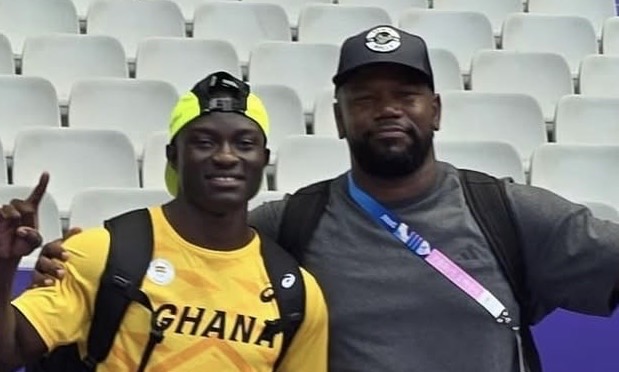
The Technical Breakdown: Amoah executed a clean, powerful race from start to finish at the Royal City Inferno in Ontario. His start off the blocks was sharp, and his drive phase remained low and aggressive through the first 30 metres. What distinguished this run was the maintenance of his top-end velocity — he showed no deceleration through the final 20 metres, carrying his speed all the way through the line to stop the clock at 9.92. American sprinter Lance Lang finished second in 10.07, with Canadian Malachi Murray third in 10.16.
The Significance: Joseph Amoah is 29 years old and just ran the fastest 100 metres of his life. This is the headline of the week — not just for Ghana, but for African sprinting. He moves to third on Ghana’s all-time list behind Abdul-Rasheed Saminu (9.84) and Benjamin Azamati (9.90). The Royal City Inferno will not make the global athletics wire. This performance strongly position Amoah in the global ranking and one of the favorite to make the commonwealth games finals and potential medalist.
The Technical Breakdown: Nene drew the outside lane in Stockholm and turned it into an advantage. His opening 200 metres were controlled — he stayed relaxed through the back straight, conserving energy while keeping his competitors in range. The defining stretch was the final bend. He accelerated through it with exceptional posture, staying tall and driving his arms efficiently as he entered the home straight. USA’s Jacory Patterson (44.69) had nothing left to answer. According to the World Athletics race report, Nene “judged his race to perfection.”
The Significance: Winning a Diamond League 400m from the outside lane is one of the most technically demanding results in professional sprinting. There is no visual reference. You run the entire race on feel. Nene did it — and he did it seven days after finishing fourth in a deeper Diamond League field in Rabat in 44.41. Back-to-back top-four Diamond League 400m results in consecutive meetings. That is not an accident. That is a quarter-miler in form, executing at the highest professional level, week after week. South Africa has long been a relay nation. Nene is making the individual 400m argument right now.
The Technical Breakdown: Tebogo, primarily a 200m specialist, stepped into one of the most loaded 100m fields of the 2026 season and delivered a season best of 9.95. His start was aggressive and his drive phase powerful through the first 40 metres. The separation came in the middle section of the race — Lyles and Eseme pulled clear, but Tebogo held his composure and his mechanics, staying tight through the finish to secure third in 9.95. Five athletes in the same final broke 10 seconds.
The Significance: The Olympic 200m champion ran his fastest 100m of 2026 in a Diamond League final where four other athletes also broke 10 seconds. This is measured competitive development. Tebogo does not need to compete in the 100m — he chooses to, uses it to sharpen his sprint mechanics, and consistently produces world-class times in the process. His personal best of 9.86, confirmed on his World Athletics athlete profile, was set at the Paris 2024 Olympic Games. This is an athlete building toward a peak, not trying to find one. By August, the distance between 9.95 and 9.86 will matter.
The Technical Breakdown: Eseme’s 9.94 was the product of a beautifully executed race from first step to final stride. His reaction off the blocks was crisp, and his drive phase was low and powerful through the acceleration zone. Where Eseme separated himself was his transition into top speed — he hit maximum velocity efficiently and held it through the final 30 metres with minimal deceleration. He crossed the line second, ahead of Olympic 200m champion Letsile Tebogo. The race was won by Noah Lyles in 9.88. Five men broke 10 seconds. World Athletics confirms 9.94 as the Cameroonian national record.
The Significance: Emmanuel Eseme just rewrote Cameroonian sprint history on a Diamond League stage in Rome. He finished second to the Olympic champion. He ran ahead of Letsile Tebogo. He ran a Cameroonian national record in one of the strongest 100m fields assembled in Europe this season. The mainstream athletics coverage will lead with Lyles — that is the nature of the media. TheSeanCast is leading with Eseme’s 9.94 as the headline for Western African sprint history that it is. This is a landmark day for Cameroonian athletics and it deserves to be documented as exactly that.
The Technical Breakdown: Tindouft ran a controlled, tactically sound steeplechase at the Paavo Nurmi Games in Turku. He stayed patient through the early laps, allowing the pace to settle before making his move in the second half of the race. His water jump technique was clean throughout — minimal splash, minimal time lost — and he pulled clear of Ethiopia’s Abrham Sime (8:14.09) in the final two laps to win in 8:11.52. Canada’s Jean-Simon Desgagnés was third in 8:14.85.
The Significance: In the same seven-day window that Soufiane El Bakkali won the Stockholm Diamond League steeplechase in 8:10.40, Tindouft wins the Paavo Nurmi Games Continental Tour Gold in 8:11.52. The two fastest steeplechase times run anywhere in the world between June 2 and June 8, 2026 — both Moroccan. Both at different venues in different countries. That is not a coincidence. That is a programme. Morocco’s steeplechase pipeline runs so deep that it can send different athletes to different professional meetings in the same week and win both. The event belongs to Morocco right now, and this week made that case in the loudest possible terms.
The Technical Breakdown: Charamba ran a controlled, powerful 200m at the Lone Star Grand Prix in College Station. His curve execution was efficient — he maintained his lean through the bend without losing speed on the transition. By the time he hit the straight, he had established a clear lead over Tate Taylor (USA, 19.97) and Aaron Brown (Canada, 20.11). He ran 19.88 with a legal wind reading of +0.1 m/s. The result is confirmed by the official USATF meet results. The Lone Star Grand Prix is a World Athletics Continental Tour Gold meeting.
The Significance: Zimbabwe keeps delivering in 2026. Nyamufarira 9.88 at the NJCAA national championships. Mpofu 45.32 in the NJCAA 400m. Chikomba 8.75m — eighth on the World Athletics all-conditions all-time long jump list. Now Charamba winning a Continental Tour Gold 200m in a legal 19.88, beating Aaron Brown in the process. The depth is real, it spans multiple disciplines. Zimbabwe is building something that will be talked about for years.
The Technical Breakdown: Karriem’s evening in Turku was a study in consistent competitive execution. He qualified fastest from Heat 1, running 10.19 (+1.2 m/s) to book his lane in the final. In the final itself, the entire field ran into a -0.7 m/s headwind — a condition that suppressed every time across the board. Karriem ran through it, finishing second in 10.22 behind Britain’s Romell Glave (10.16). His heat time of 10.19 in legal tailwind conditions is the truer reflection of where his fitness sits.
The Significance: Karriem qualifying fastest from the heats and finishing second in the final of a Continental Tour Gold 100m, on the same night his compatriot Walaza also reached the final — that is a South African sprint programme operating at depth. Second and fourth at the Paavo Nurmi Games from a single nation. That kind of collective result is what championship programmes are built from. The Paavo Nurmi Games is not a minor meet. It is a Gold-tier international competition that attracts precisely this calibre of field because of its status on the circuit.
The Technical Breakdown: Onojuvwevwo produced a well-paced, tactically intelligent 400m victory at the Lone Star Grand Prix. She ran the first 200 metres at controlled speed, conserving enough to accelerate through the final bend. In the home straight she had a clear margin over Jamaica’s Stacey Ann Williams (49.80) and USA’s Alexis Holmes (50.42). She won by more than three tenths of a second — a decisive result, not a photo finish. The official USATF results confirm the mark and placing.
The Significance: Onojuvwevwo’s 49.47 was one of three top-five finishes by Nigerian women at the same Continental Tour Gold meeting on the same afternoon. Ofili was third in the 200m. Chukwuma was fifth in the 100m. Three different Nigerian women. Three different sprint events. Three top-five results. Same competition. Same day. No other nation on the planet achieved that breadth of women’s sprint coverage at a single international meet this week. This is not coincidence — it is the output of a national programme that is firing across the full sprint range simultaneously. It deserves to be named as such.
The Technical Breakdown: Sime ran a well-structured steeplechase in Turku, staying patient in the front group through the opening laps before asserting himself in the second half. His water jump technique was technically sound throughout, and he maintained clean barrier clearance over the final two laps. He finished second in 8:14.09, behind Morocco’s Tindouft (8:11.52). According to World Athletics, his previous Paavo Nurmi Games steeplechase best was 8:14.87 set at this same venue in 2022 — this performance improves on that mark.
The Significance: Africa went one-two in the Turku steeplechase — Morocco first, Ethiopia second. This is not new territory for either nation, but it is a pattern that warrants continuous acknowledgement. Sime running a personal best or a career best at this venue in early June places him in strong contention for the deeper Diamond League rounds later this summer. Ethiopia’s barrier running depth — often overlooked in favour of its distance running profile — is real and ongoing. Sime’s 8:14 in June is the kind of baseline that produces championship-level results by September.
The Technical Breakdown: Dambile ran an assertive curve in Stockholm, eating up the stagger on the athletes outside him and entering the home straight in clear second position. Kenneth Bednarek pulled away with his trademark fluid acceleration to win in 19.87 (+1.0 m/s) — his second consecutive Diamond League 200m victory according to the World Athletics race report. Dambile held off USA’s Courtney Lindsey to finish second. His exact time was not detailed in the available World Athletics race report excerpt at time of publication.
The Significance: One week earlier in Rabat, Dambile was third behind Bednarek and Olympic champion Tebogo. In Stockholm, he moved to second behind the same Bednarek. Two consecutive Diamond League 200m podiums, improving position between meetings, against the same level of world-class competition. That is the kind of performance profile that separates athletes who are building toward something from athletes who are simply competing. Dambile is building. The trajectory is pointed in exactly the right direction for the second half of the 2026 outdoor season.
The Technical Breakdown: Tisang ran a composed, technically clean 400m hurdles race in Turku. His hurdle clearance was efficient — he selected his stride pattern well and maintained consistent rhythm through the back straight and into the bend. He applied pressure to the leaders through the final 100 metres, finishing third in 48.66 behind Slovenia’s Matic Ian Guček (48.47) and Britain’s Alastair Chalmers (48.53). The result is confirmed in the official Paavo Nurmi Games competition results.
The Significance: Tisang won the African Athletics Championships 400m hurdles gold in Accra in May. A Continental Tour Gold podium in Turku in June. The same athlete, back to back, across continental and European professional competition. A 48.66 that would have been competitive in several Diamond League 400mH finals this season places him firmly in the upper tier of the event globally. Botswana producing a 400m hurdler at this level — African champion and European Gold-tier podium in the same month — is the kind of multi-level success story that TheSeanCast was built to document and amplify.
The Technical Breakdown: Moula ran an intelligent tactical 800m in Stockholm. He positioned himself well in the opening lap, avoiding the jostling for position and staying near the front of the leading group. His second lap was strong — he moved up on the backstretch and held his position through the final straight, finishing third in 1:43.41 behind Cooper Lutkenhaus (USA, 1:42.70) and Marco Arop (Canada, 1:43.11). The World Athletics race report confirms the time and placing. One week earlier in Rabat, he was also third — but in 1:43.73. He ran faster in Stockholm.
The Significance: Two consecutive Diamond League 800m podiums, with an improving time between meetings. Slimane Moula is from Algeria. He is not from Kenya or South Africa. He is competing in the 800m at the Diamond League level with a consistency that most professional athletes in the world never reach. The African 800m story is not a two-nation story. It never was. Moula is making that case one podium at a time, and TheSeanCast is making sure his name is on record every time he does it.
The Technical Breakdown: Walaza dominated his heat, winning it in 10.13 (+1.1 m/s) to advance to the final. In the headwind final, like every other sprinter in the race, his time was pulled back by the -0.7 m/s conditions. He finished fourth in 10.26 — but the 10.13 from the heat is a far more accurate reflection of his current form. Heat wins do not happen by accident at Continental Tour Gold meetings against this level of competition.
The Significance: Walaza fourth and Karriem second in the same final. Two South African sprinters, in the top four of a Continental Tour Gold 100m in Finland, on the same evening. Add Nene winning the Diamond League 400m in Stockholm and Dambile second in the 200m two days later, and South Africa produced four athletes across four different sprint events in two different countries in the same week. That is a national sprint programme executing at professional international depth. It should be headline news for South African athletics. TheSeanCast is documenting it as exactly that.
The Technical Breakdown: Ofili ran an efficient bend and maintained strong drive mechanics through the transition into the straight. She held her form well under fatigue — a characteristic that has defined her best performances — to cross the line third in 22.15 (+0.7 m/s). USA’s Gabrielle Thomas won in 21.70. Kayla White (USA) was second in 22.07. The result is confirmed in the official USATF results for the Lone Star Grand Prix.
The Significance: Third behind Gabrielle Thomas — one of the fastest women over 200m in the history of the event. That is the context for Ofili’s 22.15. And it comes on the same afternoon that Onojuvwevwo won the 400m and Chukwuma finished fifth in the 100m. Three Nigerian women. Three sprint events. Three top-five finishes. Same day. Same stadium. This is not a coincidence — it is a national programme showing its full width.
The Technical Breakdown: Chukwuma ran a clean, technically sound 100m at the Lone Star Grand Prix, finishing fifth in 11.06 (+1.6 m/s) in a race won by Jamaica’s Sabrina Dockery in 10.92. Audrey Leduc (Canada) and Jodean Williams (Jamaica) were second and third in 10.97. Chukwuma’s presence in a final where the winner ran 10.92 and three finishers broke 11 seconds ahead of her confirms her continued relevance in international-level sprint competition.
The Significance: This is the story within the story. Chukwuma’s fifth place is not the headline on its own. But alongside Onojuvwevwo winning the 400m and Ofili finishing third in the 200m, it completes the picture of Nigeria placing three women in the top five of three different sprint events at a single Continental Tour Gold meeting in a single afternoon. That collective output — across 100m, 200m, and 400m, from a single national programme — is something that most athletics media will never document in a single story.
The Technical Breakdown: Omanyala finished eighth in the Rome Diamond League 100m in 10.11. The race was won by Noah Lyles in 9.88, with four athletes breaking 10 seconds ahead of him. World Athletics records the result in the Rome Diamond League competition database. His season previously included a Diamond League 100m victory at Xiamen.
The Significance: The African 100m record holder at 9.77 had a difficult evening in Rome — 10.11 is not the time of a man who won a Diamond League 100m earlier this season. TheSeanCast includes this result not to pile on, but because completeness and editorial honesty are non-negotiable parts of the standard we hold ourselves to. Every athlete has races like this. The African record still belongs to Kenya. It still belongs to Omanyala. Rome was one race. It does not define the season, and it does not diminish what he has built.
The Week in Full: What the Data Is Really Saying
Amoah and Eseme — two expressions of the same truth
Joseph Amoah ran 9.92 in Canada. Emmanuel Eseme ran 9.94 in Rome. Both happened over the same weekend. Both are historic for their respective nations. Both were largely absent from the global athletics narrative that week. The difference between the two is visibility — Eseme’s performance happened on a Diamond League stage, which means at least it appeared in the race results. Amoah’s happened in Canada at an open meet with no broadcast deal and no World Athletics press team in attendance.
Morocco does not share the steeplechase
El Bakkali won Stockholm in 8:10.40. Tindouft won Turku in 8:11.52. Same week. Same event. Different cities. Different athletes. Both Moroccan. The two fastest steeplechase times run anywhere in the world between June 2 and June 8, 2026 — and both of them belong to Morocco. That is not depth. That is dominance. The event belongs to Morocco right now, and this is the third consecutive week that an African athlete has stood at the top of the professional steeplechase podium. TheSeanCast will keep naming it for what it is.
South Africa’s best sprint week of the season
Karriem second and Walaza fourth in Turku. Nene winning in Stockholm. Dambile second in Stockholm. Four South African athletes produced top-four or podium results across four different sprint events in two countries in the same seven-day period. That is more combined high-level sprint output from a single African nation in a single week than most programmes produce in a month. It is the kind of result that rarely gets connected in a single story — because the Turku results and the Stockholm results appear in different places, different databases, different coverage cycles. TheSeanCast is connecting them here because connecting them is the only way the full story is told.
Both Open Today.
The 2026 Bislett Games in Oslo and the NCAA Division I Outdoor Championships in Eugene begin today, June 10. African athletes compete at the front of the steeplechase, sprint, and field events at both venues. TheSeanCast will cover both and publish the June 9–15 weekly report next Monday.
All Diamond League marks and athlete details in this report are sourced exclusively from worldathletics.org official race reports and athlete profiles. Every mark is cited exactly as confirmed. Corrections are always welcomed via our contact page.
theseancast.com